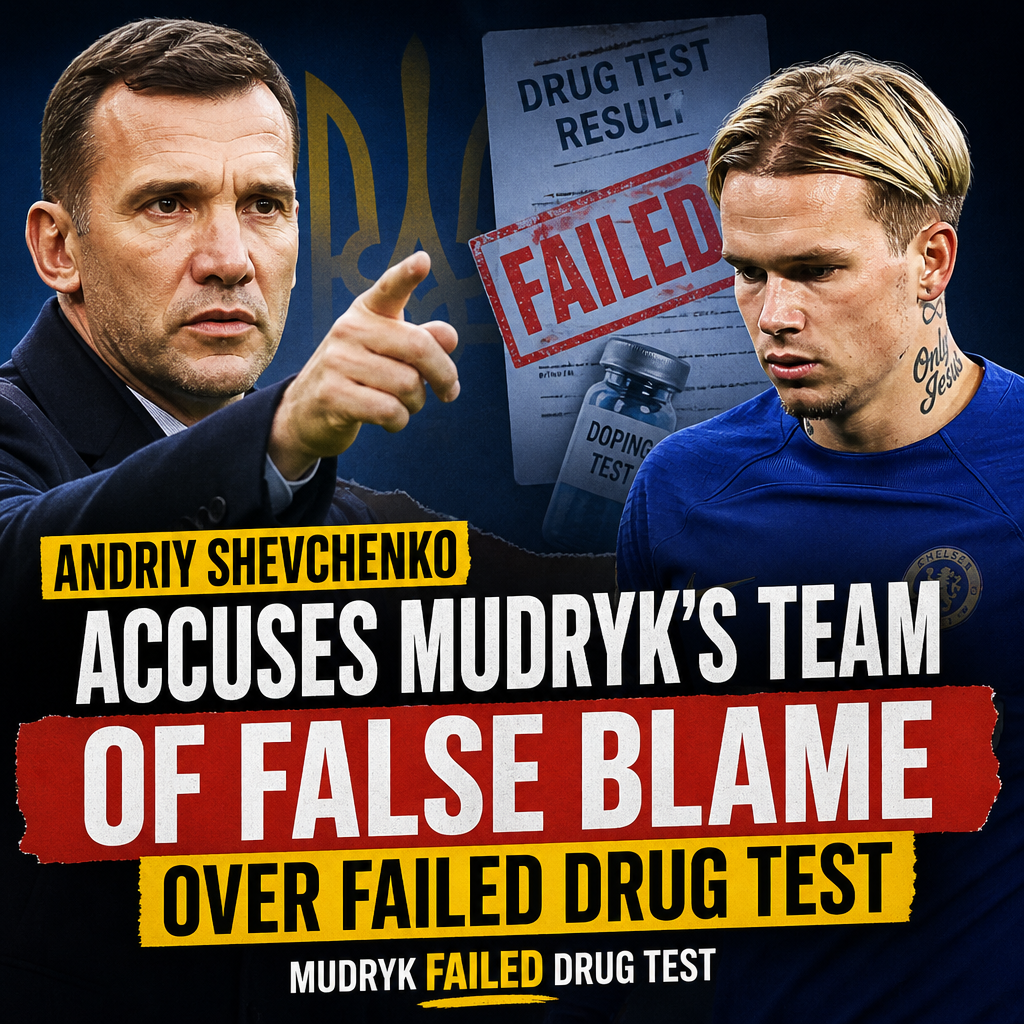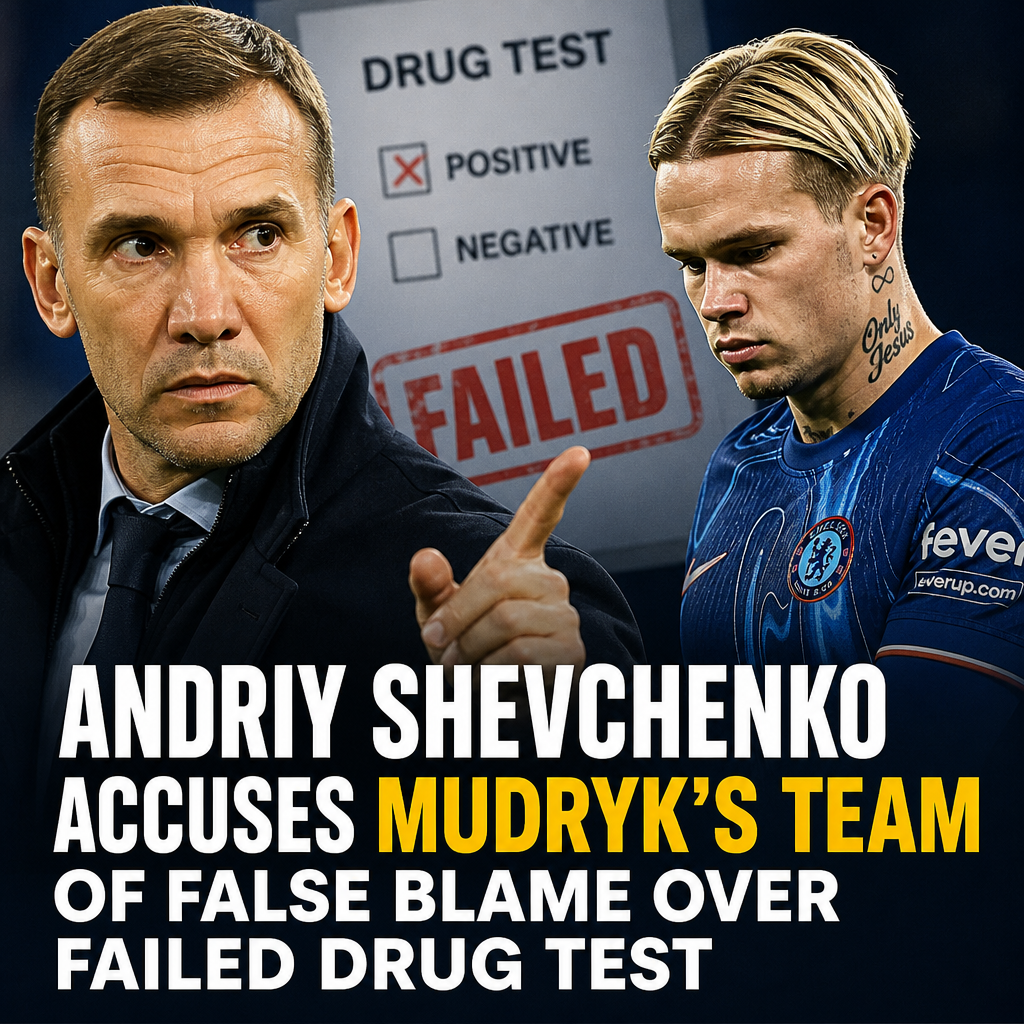

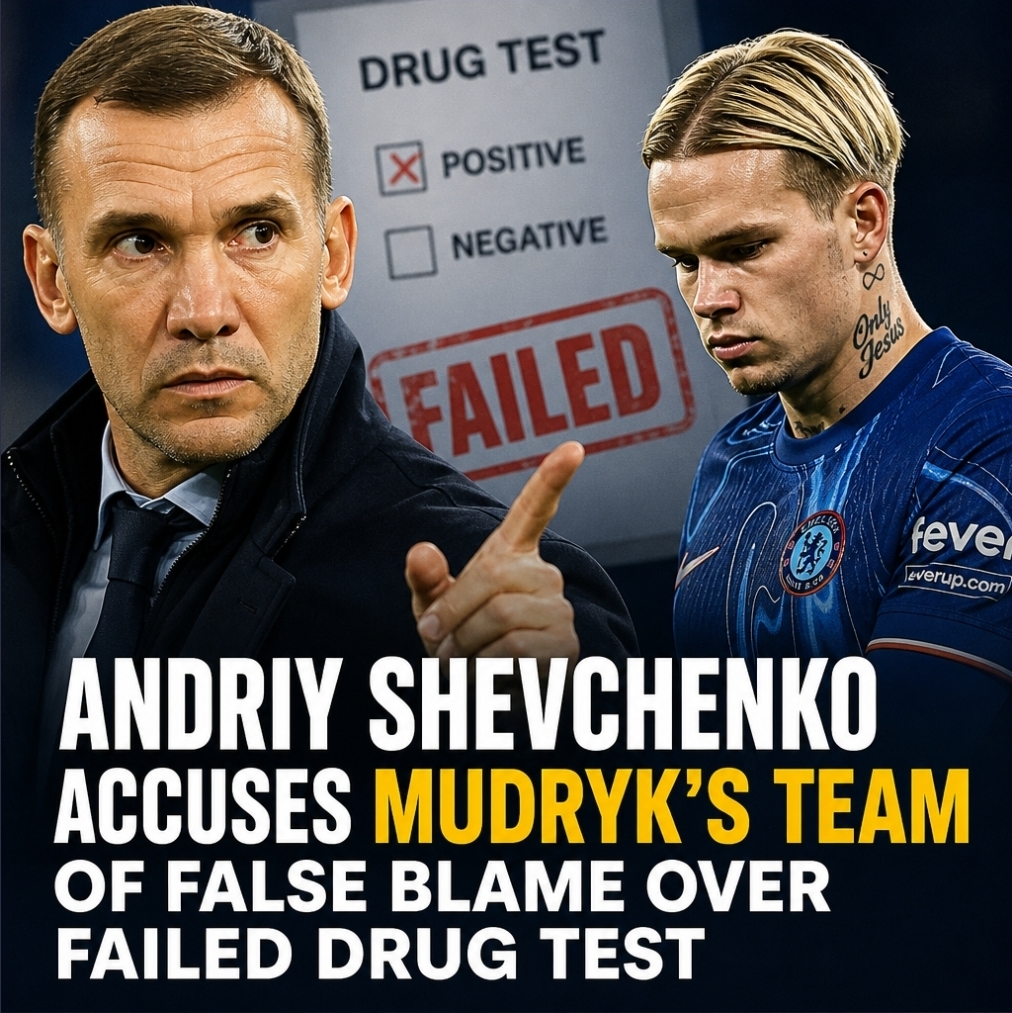
Andriy Shevchenko, president of the Ukrainian Football Association (UAF), has responded to the controversy surrounding Mykhailo Mudryk’s failed drug test, alleging that Mudryk’s team attempted to manipulate the situation. Mudryk, a winger on loan at Tottenham from Chelsea, received a 20-month suspension from November 2024 to July 2026 after testing positive for meldonium in October 2024. Meldonium is a banned performance-enhancing substance.
In a recent interview, Mudryk denied intentional doping and pointed fingers at the UAF, stating the banned substance could only have entered his body while he was with the Ukrainian national team. He implied negligence by the national team’s medical staff.
Shevchenko strongly refuted these claims, calling them “baseless slander” in a statement to Tribuna. He revealed that Mudryk’s representatives allegedly approached the UAF multiple times, seeking an employee willing to falsely take the blame for the meldonium detection. Shevchenko emphasized that such a request contradicts the UAF’s principles and integrity. He also noted that the UAF’s investigations could not determine how the substance entered Mudryk’s system, and that national team staff had followed Chelsea’s instructions to avoid administering any medication to Mudryk during international duty. Furthermore, Mudryk was permitted to have two personal specialists present during training camps to manage his medical needs.
This dispute has significant implications for the UAF’s reputation and Mudryk’s career. The suspension severely impacts Mudryk’s playing time, and his insistence on external blame highlights the importance of his public image. Both Chelsea and Tottenham also face scrutiny over their handling of Mudryk’s fitness and adherence to doping regulations during his loan.
The conflict underscores the complexities of doping accusations in football. While Mudryk suggests fault lies with the Ukrainian national team, Shevchenko asserts the UAF acted transparently and ethically, raising questions about attempts to deflect responsibility. The case serves as a reminder of the importance of doping controls, accountability, and trust in sports institutions.