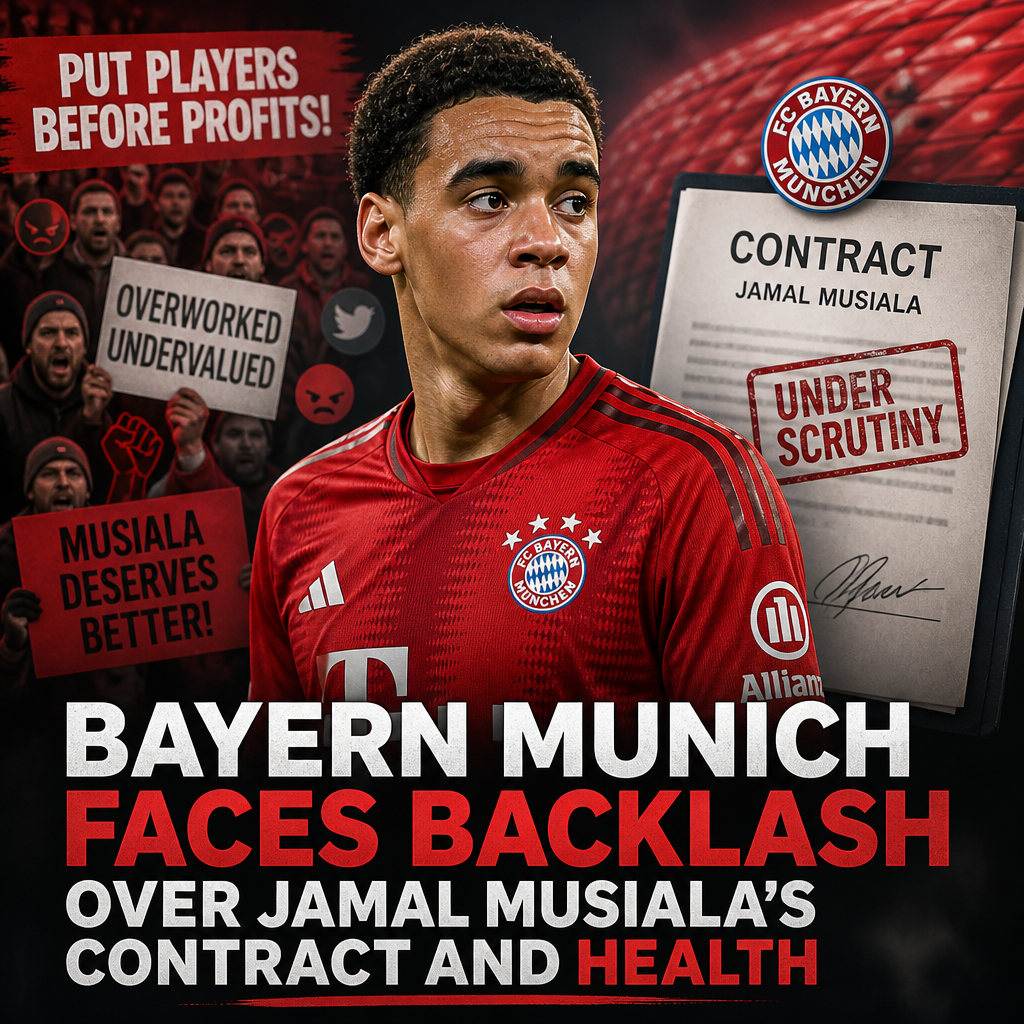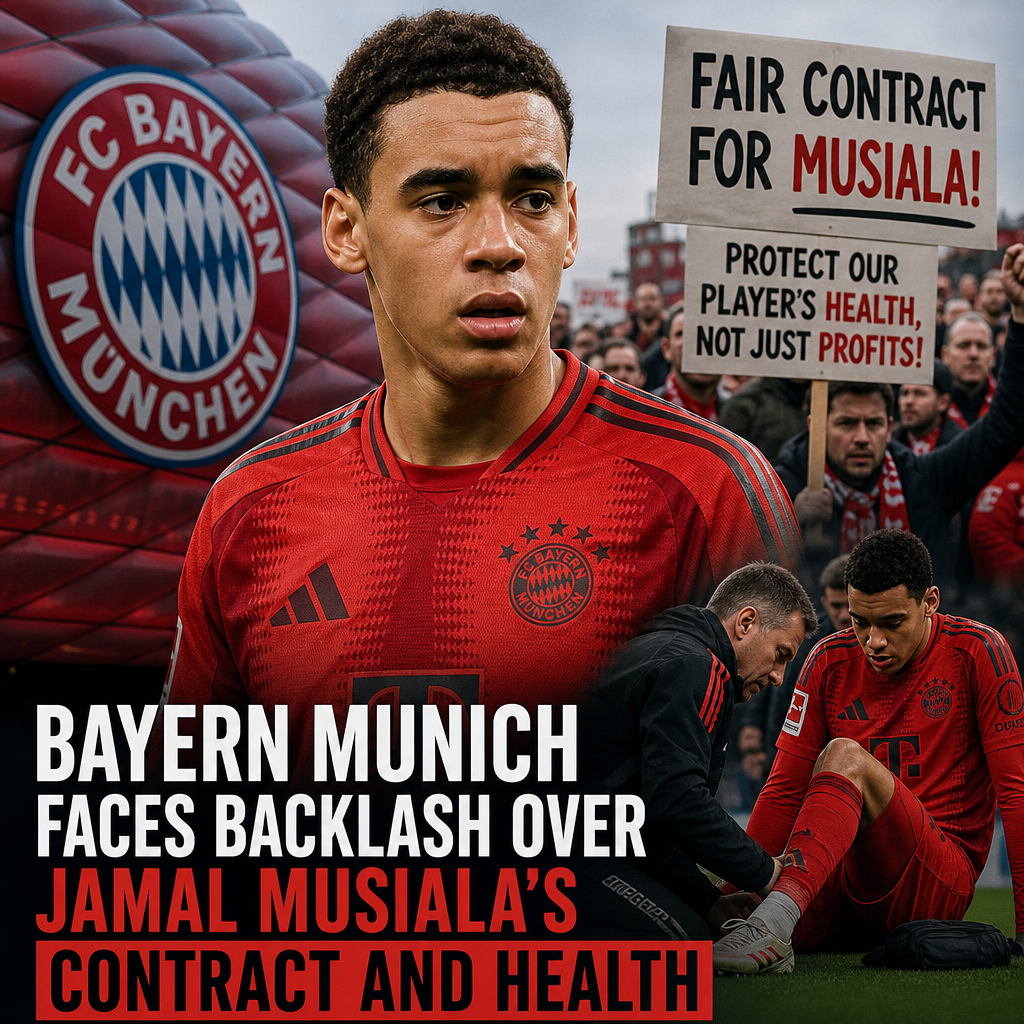

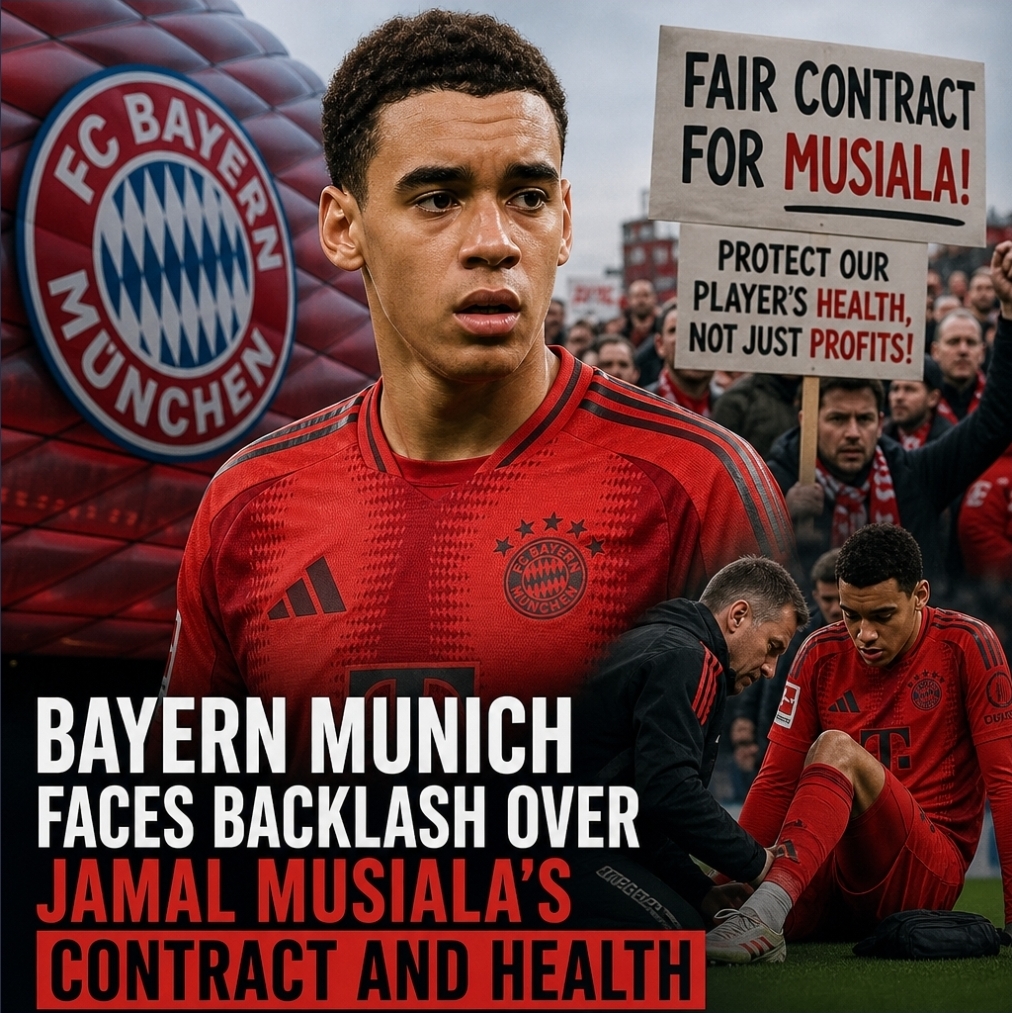
Bayern Munich’s leadership is under fire due to public comments made by executives regarding Jamal Musiala’s contract and his future performance after a neurological diagnosis. This has drawn widespread condemnation from players, unions, and medical charities.
In August 2026, Musiala, a 23-year-old midfielder, experienced two collapses during pre-season matches, leading to medical evaluations. He was diagnosed with a neurological dysfunction causing absence seizures, which he stated are treatable but acknowledged present challenges.
Since his diagnosis, Musiala’s playing time has been limited, and he reportedly had another seizure episode in November, raising concerns about his recovery and career trajectory.
In the weeks following the diagnosis, prominent Bayern figures, including Honorary President Uli Hoeness, board member Karl-Heinz Rummenigge, and CEO Jan-Christian Dreesen, publicly questioned Musiala’s contract prospects and performance. Hoeness described the situation as a “dilemma,” suggesting Musiala might not return to his previous form. Rummenigge raised doubts about the sustainability of Musiala’s €23–25 million gross annual salary if his performance doesn’t rebound. Dreesen echoed concerns about the prudence of his contract extension, which runs until 2030.
These statements, seen as undermining Musiala’s value during a vulnerable period, quickly led to backlash.
Bayern captain Joshua Kimmich strongly criticized the leadership’s public approach after a Champions League match, calling it an “absolute no-go” and stressing the importance of respecting Musiala’s dignity, stating, “The club is bigger than the player, yes, but it is not bigger than the person.”
Global players’ union FIFPRO accused Bayern Munich of a “coordinated strategy to put pressure on Musiala” during potential contract negotiations. The German footballers’ union (VDV) also expressed disapproval, emphasizing clubs’ duty of care to players.
UK charity Epilepsy Action stated the public is “rightly outraged” over Bayern’s approach, reminding employers that their obligations remain unchanged when an employee is diagnosed with a seizure disorder.
In response to the escalating controversy, Bayern’s sporting director Max Eberl met with Musiala’s agency, 11WINS. The club and agency issued a joint statement affirming Musiala’s health as the “top priority” and pledging full support for his recovery, noting that no wage discussions occurred. The statement also clarified that Musiala’s seizure symptoms were first examined on 22 April 2025, after his contract extension, refuting claims of hidden information during negotiations. Both parties agreed to keep further discussions private.
Bayern Munich’s handling of Musiala’s medical condition and contract situation serves as a cautionary example for elite sports organizations. Publicly questioning a player’s health and future after a serious neurological diagnosis can violate privacy and alienate stakeholders. The incident underscores the need for sensitivity, privacy, and support when addressing player health issues, prioritizing individuals over contracts and public attention.