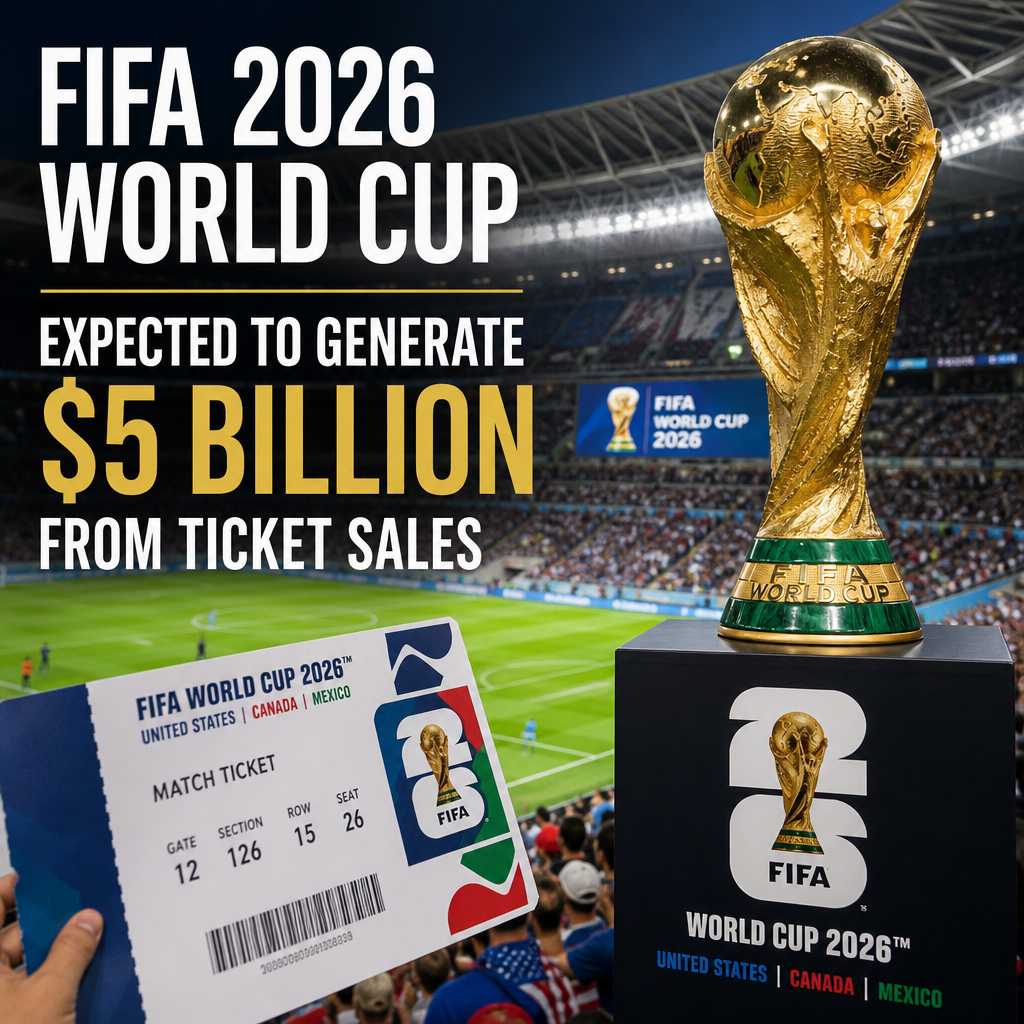


FIFA is projecting a substantial financial windfall from the 2026 World Cup, co-hosted by the United States, Canada, and Mexico, with an estimated $5 billion expected from ticket and hospitality sales alone. This projection represents a more than fivefold increase compared to the revenue generated during the 2022 tournament in Qatar.
FIFA President Gianni Infantino reported that the 2022 World Cup in Qatar generated $15 billion in revenue, exceeding initial expectations by $2 billion. Of this total, approximately $5 billion, or one-third, is anticipated to come from ticket and hospitality sales for the 2026 event. While this figure is part of an ongoing audit and may see minor adjustments, the significant leap in revenue is evident.
In comparison, the 2022 Qatar World Cup featured 64 matches and generated $929 million from ticket and hospitality sales. The 2026 North America World Cup, however, will host 104 matches, leading to the projected $5 billion in sales.
The surge in revenue is attributed to several factors. The expansion of the tournament to include 48 teams, up from 32, results in 104 matches, increasing opportunities for ticket sales. FIFA also implemented dynamic pricing for the first time, adjusting ticket costs based on demand. This led to record-high prices, with final tickets at New Jersey’s MetLife Stadium on July 19 starting at $4,185, seven times the cost of the cheapest final ticket in Qatar.
FIFA’s policy of restricting resales to its own platform, from which it takes a 30% commission, has helped curb ticket touting and allows for reinvestment into global football development. Modern infrastructure and larger stadium capacities in North America also facilitated increased sales of premium hospitality packages and exclusive fan experiences.
Despite criticisms regarding high ticket prices and limited resale options, FIFA defended its ticketing strategy as a means to ensure fairness and maximize reinvestment. The governing body plans to utilize the generated revenues to support football development across its 211 member associations through initiatives like the FIFA Surplus Solidarity Programme, aiming to more than double planned funding for 2027–2030 to $6.35 billion.
In conclusion, the 2026 World Cup is poised to be a major financial success for FIFA, driven by an expanded schedule, innovative ticketing strategies, and premium hospitality offerings. This financial boost is expected to significantly contribute to the growth and development of football worldwide.